
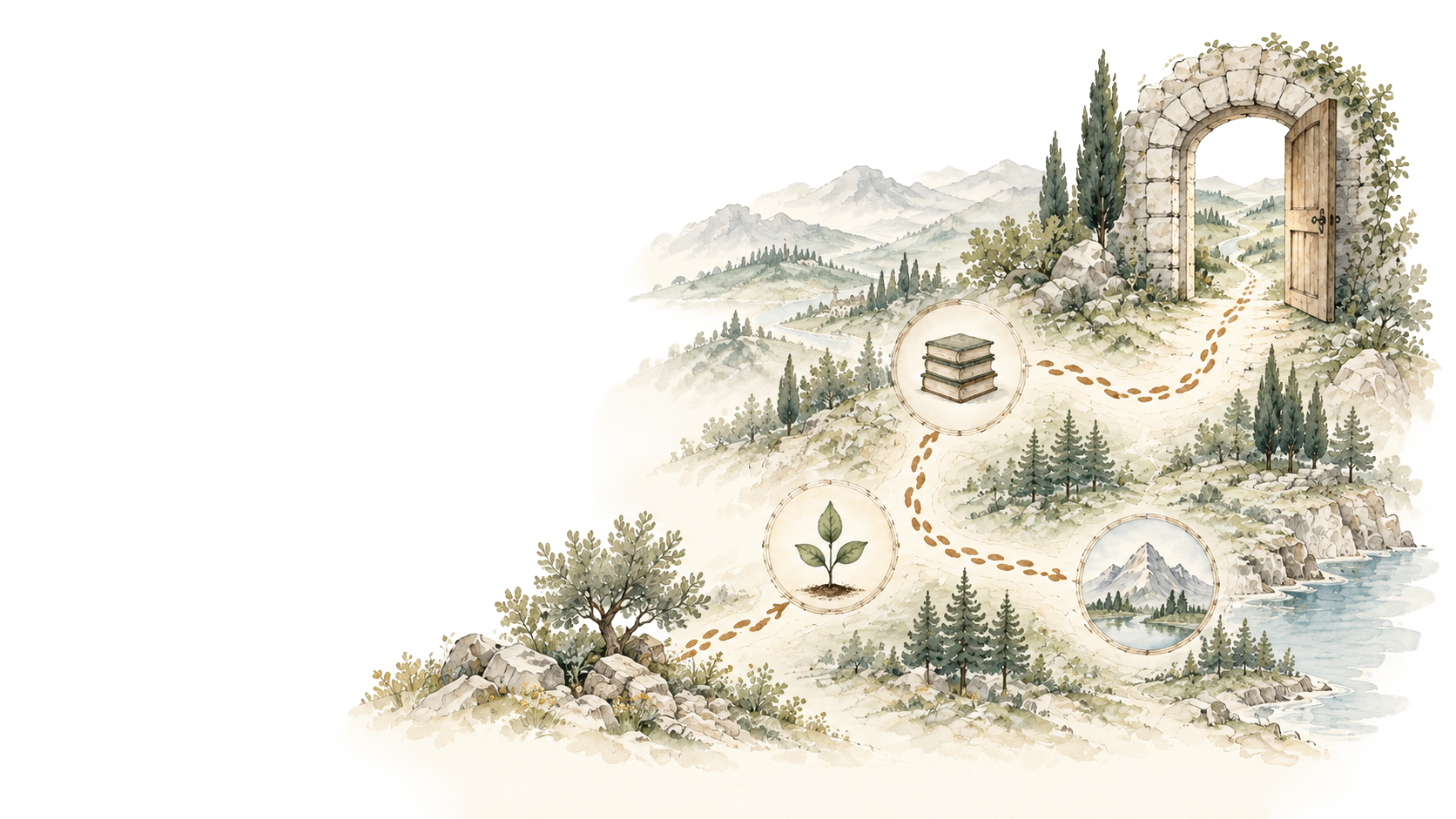
Serendipity opens the door. Curiosity explores what lies beyond it. Evidence governs how far we can responsibly travel. Sensemaking brings what we discover back into the wider journey.
I wasn't looking for Keith. I wasn't searching an archive, revisiting an old project or trying to find another piece of evidence for something I already believed. I clicked the wrong thing on my phone and somehow ended up in a shared Critical Friend folder Keith Lyons had given me access to years ago. I opened it and something moved. Not because it contained an answer, but because the questions and language inside it felt strangely familiar.
Over the last year I have spent a ridiculous amount of time trying to understand what happens when AI enters human thinking. Not simply what AI can do, but what happens to the person working with it: what should be delegated, what should remain difficult, what happens when the work improves but the person learns less, and how judgement is preserved when convincing answers arrive almost instantly. The way of working that has emerged developed through use rather than from a theory or blueprint. Some things worked. Others failed. Some failures became rules and some rules were later discarded. Until I opened this folder, I had not particularly connected that work to Keith.
Keith passed away in 2020, long before ChatGPT became part of my daily practice. Yet if I wanted a question stretched, a source chased, a thought challenged or another route opened, Keith was often the person I went to.
The exchange did not only move in one direction. Keith sometimes wrote about the relationship in ways that suggested a shared movement of ideas rather than a simple mentor–learner arrangement. In one post he referred to me as a companion in his thinking and noted the way things I sent him could lead him towards other sources and questions. A few years later he used the much simpler phrase “my connector”.
At the time I do not remember treating any of those phrases as especially important. They belonged to an ongoing conversation in which Keith would write something, I would send something, a question would appear, one of us would disappear into another part of the literature, and something would come back changed.
That relationship had already returned this summer through Beyond the Breadcrumbs, a project built by going back through Keith's Clyde Street archive and following people, questions, sources, changes of language and unfinished trails. One part of that work became A Conversation That Kept Moving. What interested me there was not a neat influence story but the movement itself: Keith sometimes opened an inquiry without deciding where it had to end; I sometimes sent something into his field of attention and watched him connect it to a much larger history of scholarship and practice; what came back could then change what I noticed next.
Other routes through the same project now look different in the light of this folder. Travel Companion followed Keith's search for language to describe accompanying another person's learning. Who Owns the Learning? asked how support can remain support without quietly taking the learning over. When Challenge Gives Way to Listening returned to critical friendship under pressure. At the time these were separate trails. The folder has made them touch.
The folder itself is a literature trail. Stenhouse, Costa and Kallick, Kember, MacBeath, Swaffield, Gibbs and Angelides and others appear around questions of support, challenge, trust, reflection, learning and ownership.
I had stumbled into the folder by accident. The obvious temptation was to jump immediately towards the connections that now seemed possible. But that would be to read the journey backwards.
Before following anything out of the folder, there was a simpler question.
What had Keith actually been looking at?
Serendipity opened the door. Curiosity now has somewhere to go. Evidence will decide how far we can responsibly travel. Sensemaking will bring whatever survives back into the wider journey.